Tables Size Trend Chart
Overview
A Tables Size Trend Chart visualizes the growth or reduction in the size of database tables over time. This chart is a critical tool for tracking data storage trends, identifying inefficiencies, and optimizing database performance and security.
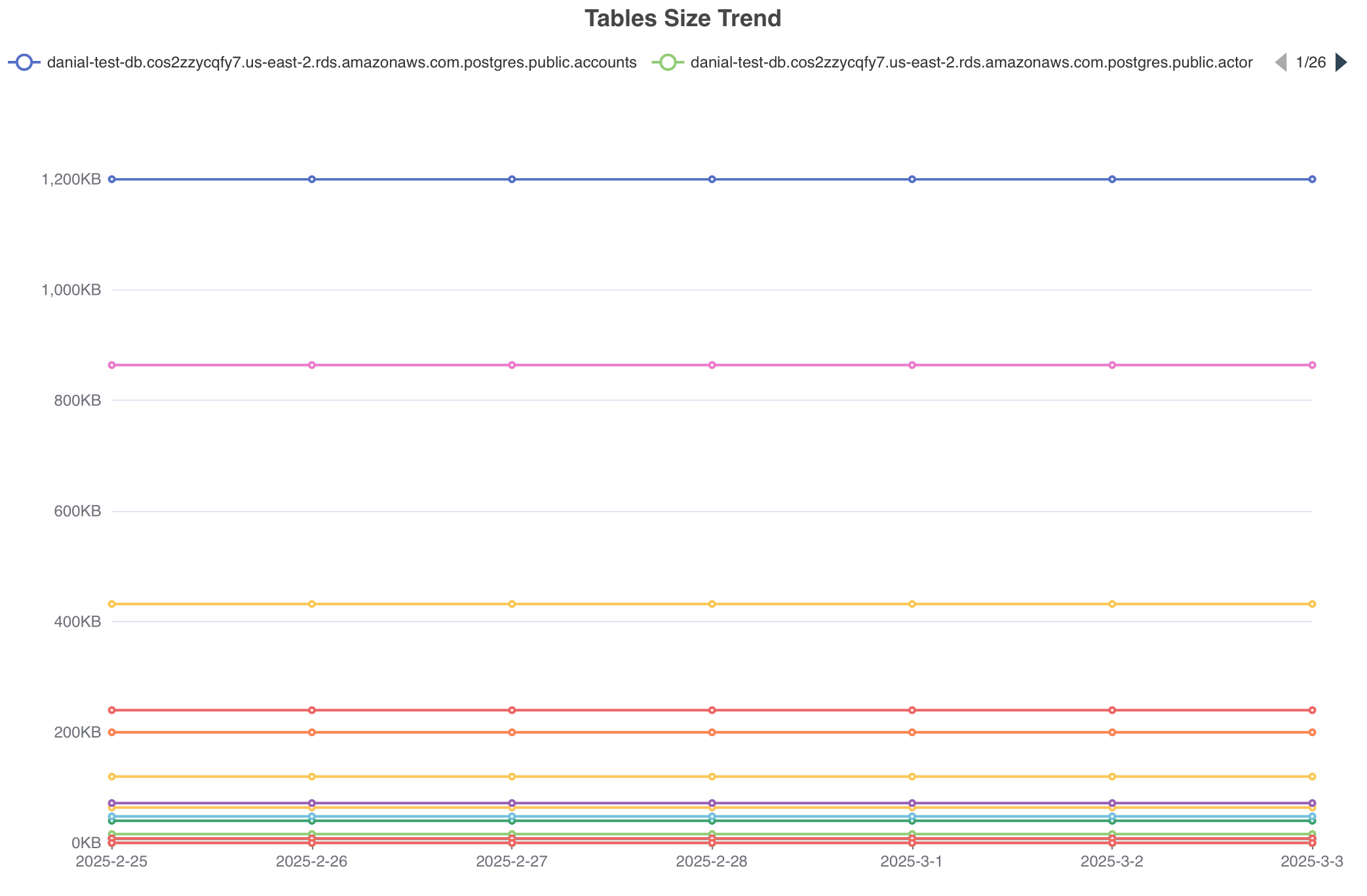
Why This is Valuable to IT and Security Engineers
1. Capacity Planning
- Insight: Monitoring table size trends helps predict future storage requirements.
- Benefit: Avoids performance degradation and ensures that adequate resources are allocated.
2. Data Lifecycle Management
- Insight: Tables growing faster than expected may indicate unoptimized data retention or inefficient storage mechanisms.
- Benefit: Helps maintain optimal database performance by identifying tables that require archival or cleanup.
3. Security Monitoring
- Insight: Sudden size increases might signal:
- Malicious data injections.
- Unusual logging behavior.
- Benefit: Enables rapid investigation of potential breaches or misconfigurations.
4. Application Debugging
- Insight: Fluctuations in table size can point to issues in data ingestion pipelines or application workflows.
- Benefit: Helps identify and resolve bugs or inconsistencies in real-time.
5. Compliance and Governance
- Insight: Oversized tables with sensitive data may violate data storage policies or regulations like GDPR.
- Benefit: Supports compliance by ensuring data is stored securely and efficiently.
Key Metrics to Monitor
- Table Size (Bytes): Current size of each table, including data and indexes.
- Growth Rate: The rate at which each table's size is increasing or decreasing over time.
- Storage Distribution: Breakdown of storage usage across different tables.
- Anomalies: Sudden spikes or unexpected changes in table size.
Real-World Use Cases
-
Proactive Capacity Planning
- A growing log table signals the need for additional storage allocation before it impacts performance.
-
Pipeline Debugging
- Sudden growth in a staging table may indicate issues with ETL processes or excessive logging.
-
Security Breach Detection
- An unexpected size increase in a sensitive table (e.g.,
user_data) could signal malicious data injections.
- An unexpected size increase in a sensitive table (e.g.,
-
Performance Optimization
- Identifying bloated tables allows engineers to refactor schema, optimize indexes, or implement partitioning.
-
Data Archiving
- Tables with gradual size growth may benefit from archival policies to offload older data and free up space.